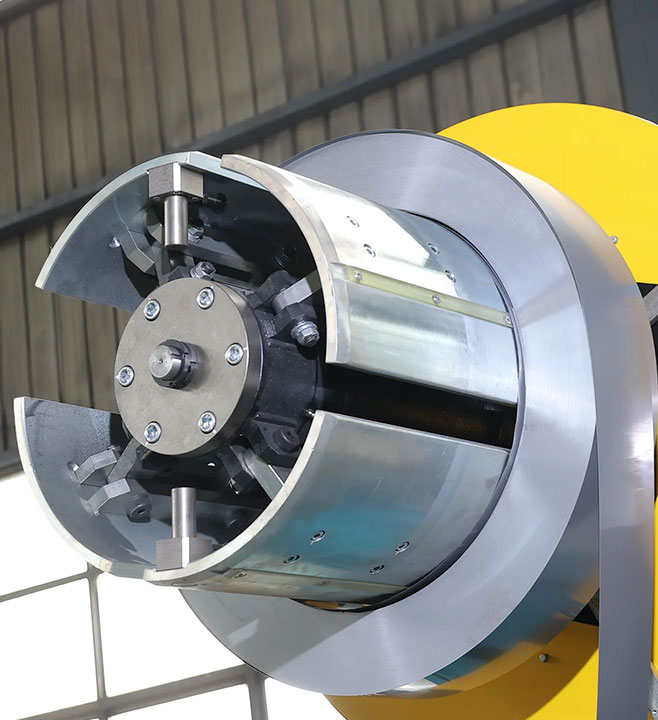
Installing Two Lines in Kazakhstan: Foundations, Oils and Grout Sourced Locally
In spring 2026 our engineers installed a slitting line and a 400-class cut-to-length line for a transformer maker in Kazakhstan. Most of the work before commissioning was about things bought locally: foundations, oils and grout. Notes on how each was settled.
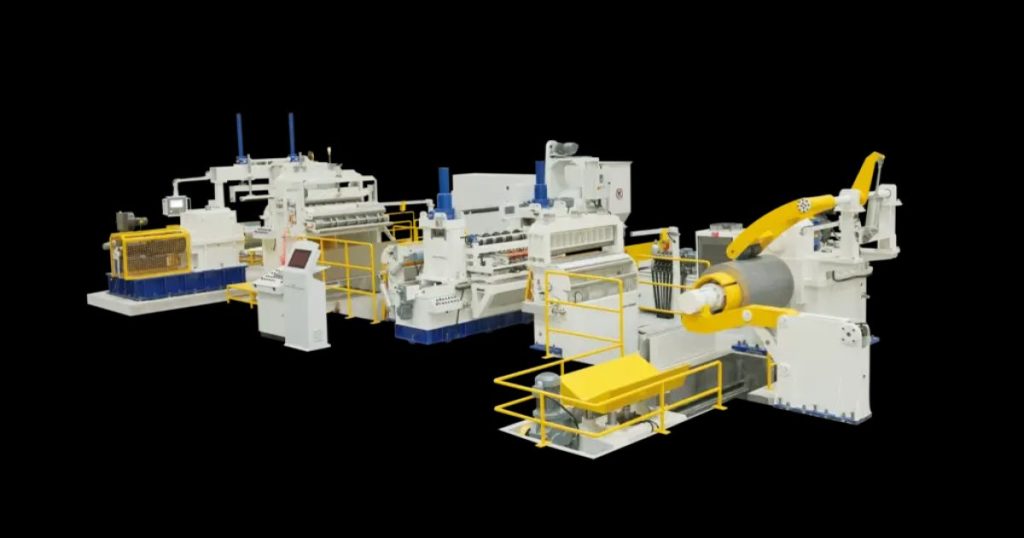
Between April and May 2026 an SREE team installed two lines for a transformer manufacturer in Kazakhstan: a silicon steel slitting line and a standard 400-class cut-to-length line. The machines themselves went in as planned. What took most of the preparation time were the things a plant buys locally: the foundation, the oils and the grout. This note records how each one was settled, because the same questions come up on almost every installation outside China.
The foundation: checked before the team flew
At the end of March the customer sent photos and a video of the finished foundation for the slitting line. Checked against our foundation drawing, the decoiler and recoiler positions did not line up with the pit. Rather than correct it on site, we issued an adjusted construction plan on 1 April: the decoiler, uncoiling section and pit were moved 600 mm along the line. The customer reworked the concrete before our engineers arrived, which is far cheaper than doing it with the machine sections waiting beside it.
The same exchange settled anchoring. The customer asked whether ordinary expansion bolts could be used to fix the slitting line; for the slitting line they cannot, and the anchors are drilled and fixed to the drawing. The fixings had been shipped with the machines, listed on the packing list, so the answer was to open the right cases rather than buy new parts.
Oils: the specified grade, or its local equivalent
Our technical documents specify an industrial closed gear oil and an anti-wear hydraulic oil by grade, together with the quantities to have on site before installation. In Kazakhstan the plant could only buy locally made oils, and it sent the data sheets of a hydraulic oil (HLP 46 class) and a reduction-gear oil (CLP 220 class) for us to check.
Before answering, our engineer asked one question that is easy to miss: how cold does the workshop get? Winter outside in that region can reach −40 °C. The plant confirmed the workshop is heated and does not fall below about +13 °C, normally 17 to 19 °C. With that confirmed, our engineer marked on the local data sheets which products to use, and the oils were bought locally.
Grout: what to use when the specified product is not available
The preparation list asks for about 1.5 t of grout of C40 or higher for setting the machine bases. The plant could not source the specified product and proposed a rapid-hardening local cement rated ГЦ-40, roughly equivalent to C30 to C40 concrete. We accepted it on two conditions: at least C30, and a setting time short enough for the commissioning schedule. To avoid waste, the plan was to buy about 750 kg first and order more only if needed.
Installation and acceptance
The lines were erected, levelled and grouted, the guards and railings were fitted before running, and both lines went through no-load and load commissioning on the customer’s own coils. On-site acceptance for the slitting line and the cut-to-length line was held on 28 May 2026, signed on our on-site service form, and the team flew home the same week.
What we would tell the next customer
- Send photos of the finished foundation, with dimensions, before the team books flights. A 600 mm error is a concrete job, not an installation job.
- If the specified oils are not available locally, send the local data sheets early, together with the lowest workshop temperature.
- Check the packing list before buying fixings: anchors, bolts and tools usually travel with the machine.
- Order grout in two lots. The first lot proves the product; the second avoids waste.
The general preparation list is in before the engineers arrive. For the machines, see the slitting line and the standard cut-to-length line; other field notes are on from our sites.
Frequently asked questions
Can local oils be used instead of the grades in the technical documents?
Often yes, if the viscosity grade and type match and the workshop temperature is known. Send the local product data sheets and we will check them before you order.
Can expansion bolts be used to fix a slitting line?
No. The slitting line is anchored as shown on the foundation drawing; the fixings are normally shipped with the machine.
What if the specified grout is not available?
A local grout or rapid-hardening cement of at least C30 can be accepted, provided its setting time fits the commissioning schedule. Confirm it with us before pouring.
Sizing a line for your core shop?
Send strip widths, thickness and monthly tonnage. You get a line proposal with knife layout and floor plan, or use the online selector to narrow the series first.