Field Notes from India: Installing a Silicon Steel Slitting Line, Part 1
Our four-person commissioning team is in India this month to install and commission an SRZJ slitting line for a transformer core manufacturer. Part 1 covers the plan: registration, site preparation and the three weeks of work ahead.
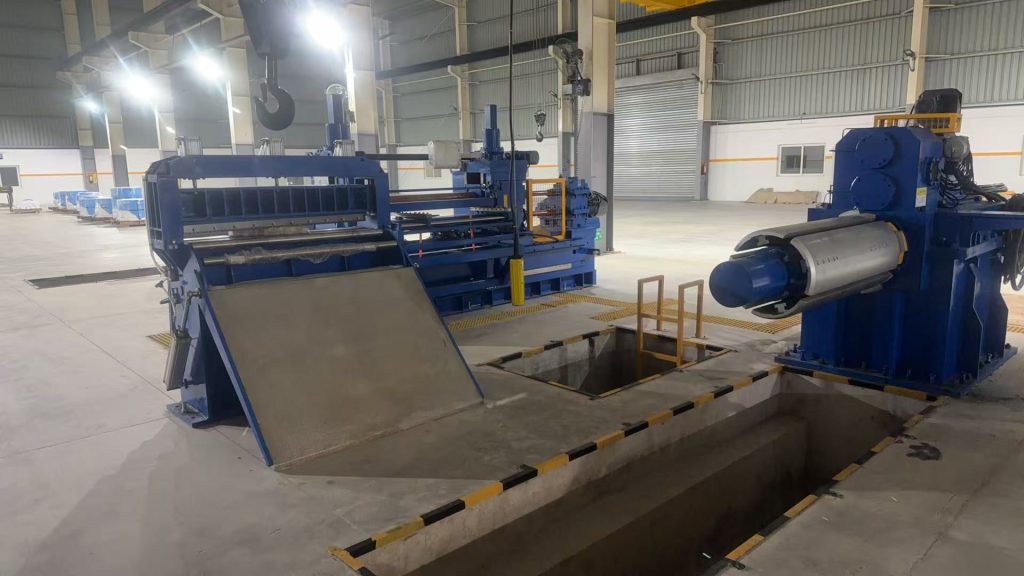
In September 2026 a four-person SREE team travelled to India to install and commission a silicon steel slitting line for a transformer core manufacturer. The machine cleared Indian customs at the beginning of the month; the team followed two weeks later. This is the first of two short notes on the job. Part 1 is about the plan and the preparation, written while the work is under way; Part 2 will cover commissioning and hand-over once the line is cutting the customer’s coils.
The team and the machine
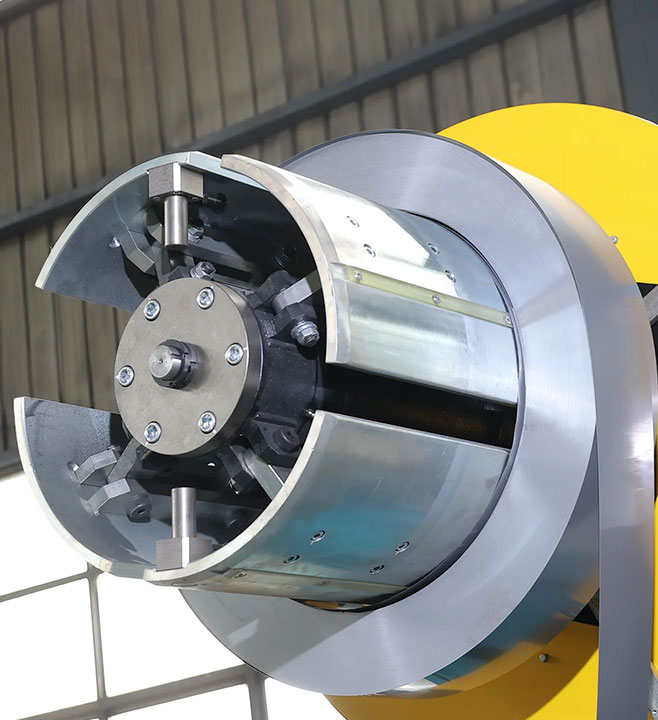
The team is Allen Feng from international sales, Hu Xiaowei and two installation engineers from our commissioning team. The machine is an SRZJ silicon steel slitting line: decoiler, slitter head with hardened knife arbors, tension and rewind stations, shipped in sections and reassembled on site. The slitting line page has the specification; slitting line vs cut-to-length line explains where it sits in a core shop.
Before the tools come out: registration
Anyone sending engineers to India on a business e-visa for installation work should plan for the Foreigners Regional Registration Office (FRRO). Registration is required within 14 days of arrival at the office responsible for the inviting company’s district, and the registration certificate is needed before departure. Approval currently takes ten to fifteen working days for Chinese nationals, and it needs hotel residence forms and a set of letters from both companies. We planned the trip around it: arrival in the city where the customer is registered, three to four days for the FRRO application, then travel to the plant, so that the certificate is ready by the time commissioning finishes. It is administrative rather than technical, but it decides whether a three-week job takes three weeks, so it is the first item on the plan.
Progress so far
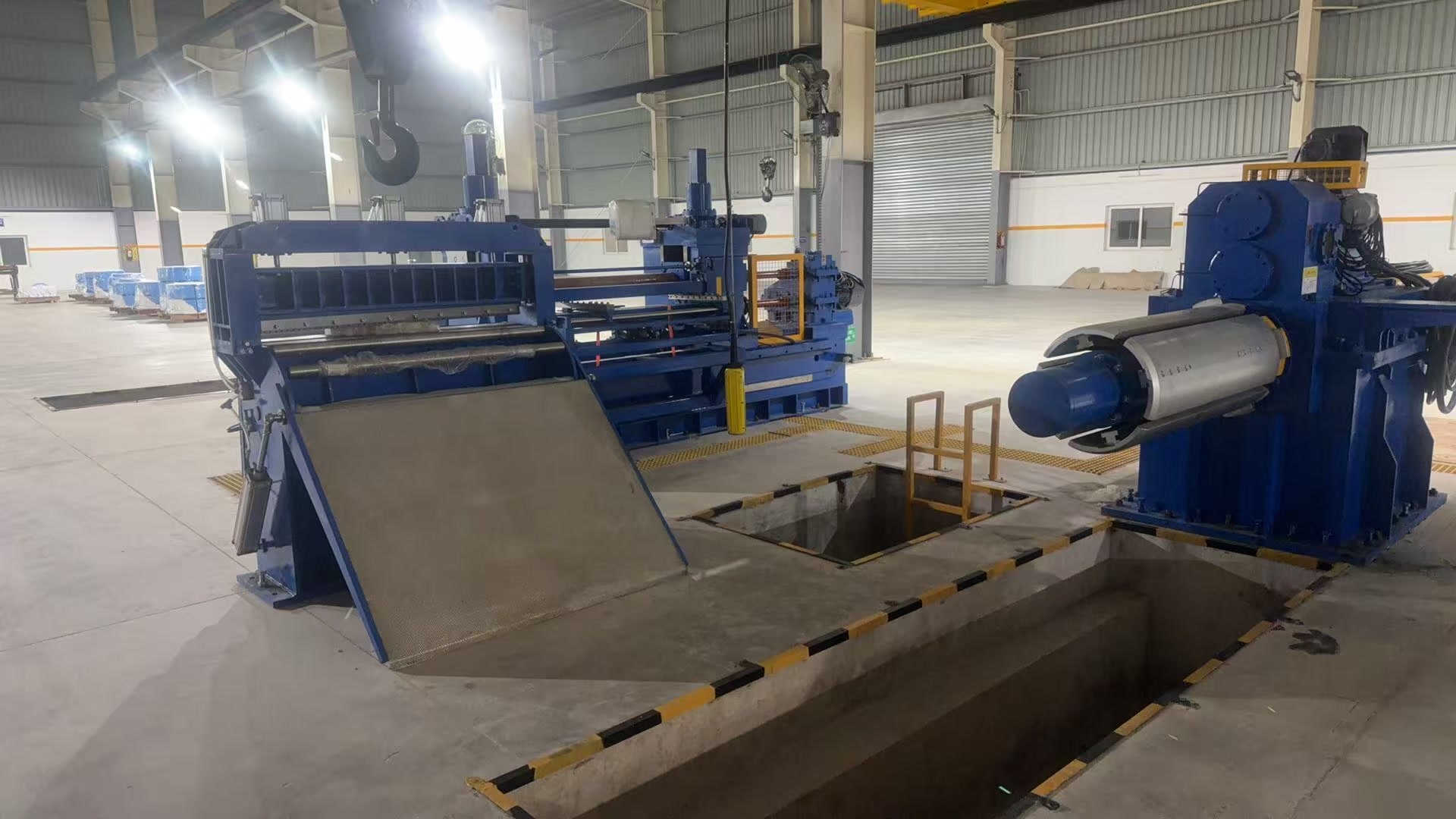
The team flew out of Shanghai on the night of 12 September and landed in Ahmedabad the next morning. The FRRO application was filed over the following three days, which kept the registration on the schedule above. By 17 September the line stood on its foundation at the plant, with the main stations set along the centreline and the pits for the strip loop and recoiler ready. Electrical work and no-load runs follow; Part 2 will report the load test on the customer’s own coils and how many days the job actually took.
Update, 26 September: the electrical installation is finished and the line has been powered up. Knife setting for the first slitting programme comes next, followed by the load test on the customer’s own coils.
The installation plan
The installation follows the same sequence we use on every line, whether the plant is in Jiangsu or Rajasthan.
- Foundation and utilities check. Foundation bolts, level and flatness against the foundation drawing; power supply, earthing and compressed air at the specified values. Most delays on foreign installations come from this step, which is why the drawings go to the customer weeks in advance.
- Mechanical erection. Machine bases positioned and levelled, sections aligned along the line centreline, decoiler and rewind stations set square to the slitter head.
- Electrical installation. Control cabinet, drives and cable runs connected, safety circuits checked, motors bumped for direction.
- No-load commissioning. Each station run on its own, then the line as a whole, with speeds, tensions and interlocks set.
- Load test on the customer’s material. Knives set for the first slitting programme, master coils run, strip width and edge quality measured against the specification, and the rewind checked for tightness and telescoping.
- Operator training and hand-over. Knife changes, tension setting, daily checks and the fault list on the HMI, with the customer’s operators running the line themselves before we leave.
The plan allows about twenty working days on site for steps 2 to 6. Part 2 will say how many it actually took.
Frequently asked questions
Does SREE install its own lines abroad?
Yes. Installation, commissioning and operator training are done by SREE engineers, and the acceptance test on site is run on the customer’s own coils.
How long does a slitting line installation take?
Around three weeks on site for a line of this size, provided the foundation and utilities are ready when the team arrives.
What does the customer need to prepare?
The foundation to our drawing, power and air to specification, a crane or forklift for the heavier sections, master coils for the load test, and the operators who will run the line, so that training happens on their own machine.
Sizing a line for your core shop?
Send strip widths, thickness and monthly tonnage. You get a line proposal with knife layout and floor plan, or use the online selector to narrow the series first.