Articles · Technical Basics
Technical Basics
Practical, engineering-level notes from a machine builder: how cut-to-length, slitting and stacking lines work, how to size them, and what the numbers on a datasheet really mean.
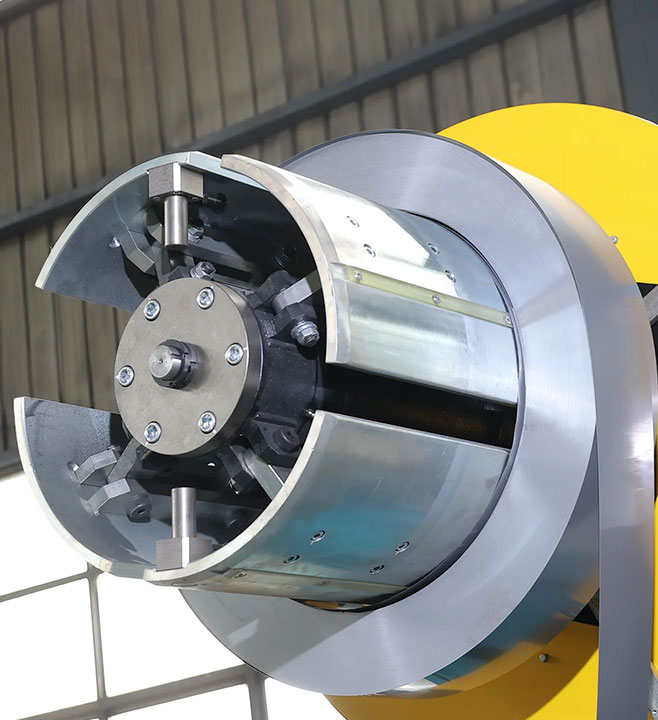
Technical BasicsWhat Is a Cut-to-Length Line for Transformer Cores? How a CTL Line Works, Station by StationA cut-to-length (CTL) line turns coils of grain-oriented silicon steel into finished core laminations. This guide walks through every station on the line, what each one does to the strip, and which numbers on a datasheet actually matter.Technical BasicsCutting Tolerances That Matter for Transformer Cores: Angle, Length and BurrThree numbers on a cut-to-length line datasheet decide how good the finished core will be. Here is what each one does to no-load loss, noise and stacking, what the figures should look like, and what to ask a supplier before you believe them.Technical BasicsStep-Lap Core Cutting: V-Notches, Yoke Widths and How Many Punch Stations You NeedStep-lap joints and V-notches are what make a cut-to-length line more than a shear. This article explains what the line has to do for a step-lap core and gives the rule we use to decide between one and two V-notch stations.Technical BasicsProcessing Thin CRGO (0.18 to 0.23 mm): What Changes on a Cut-to-Length LineThinner grain-oriented steel lowers core loss but is harder to feed, cut and stack. This article covers what actually changes on the line when you move from 0.27 or 0.30 mm to 0.18 or 0.20 mm, and what to specify so the line copes.